Dingli Cliffs can fit a Malta driving holiday in several different ways: a short coastal view, a village-and-countryside afternoon or the starting point of a longer walk. Those are not interchangeable plans. A rental car helps you choose when to travel, but it also creates a practical question that is easy to overlook: where will the walk finish, and how will everyone get back to the vehicle? This guide focuses on that decision, legal parking, weather and the return journey. It does not certify a particular cliff path as safe or promise an empty parking space beside the view.
Locate Dingli before choosing the type of visit
The Malta tourism ministry's destination guide places Dingli in western Malta, near Rabat and Mdina. It describes elevated coastal scenery, terraced fields and views towards Filfla. That is useful geographical context, not a current access report. Dingli village, a roadside destination pin and a particular walking viewpoint may lead to different final approaches.
Choose the experience before entering a name into navigation. A traveller seeking a brief view should not accidentally follow a walking route to a remote endpoint. Someone planning a substantial walk needs more preparation than a driver stopping between other visits. Write down the intended arrival point, the walking plan and the way back; then check that all three refer to the same outing.
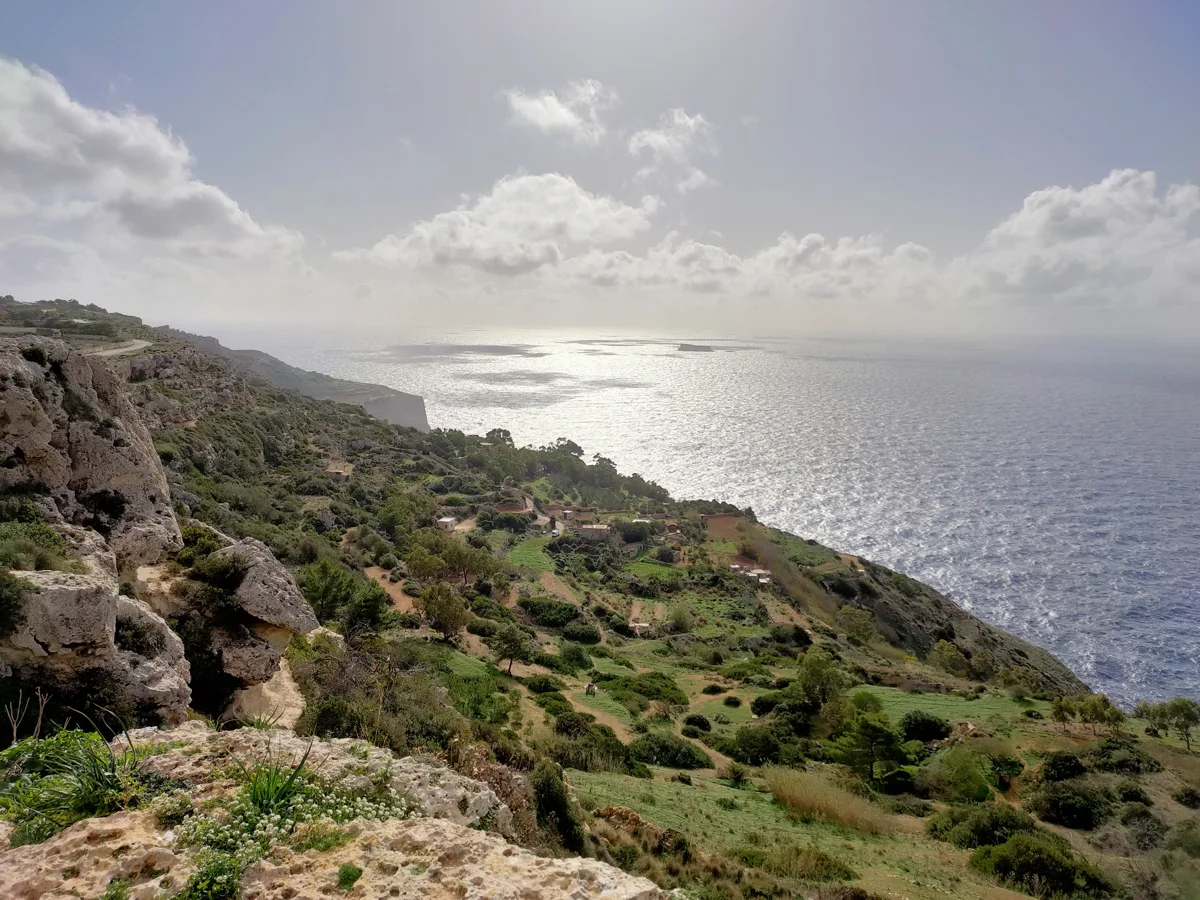
The ministry guide identifies the Chapel of St Magdalene as a local landmark. A landmark can help orient your map, but it does not establish a public parking entitlement, an open building or step-free access. Treat the photograph on this page as an illustration of the landscape. It was taken in December 2020 and cannot tell you today's road, surface or weather conditions.
Choose a brief stop or a proper walking day
For a short stop, keep the objective modest: arrive lawfully, assess the conditions, enjoy an accessible view from a suitable permitted place and return to the car. The stop can be worthwhile without walking a long distance. Avoid adding an informal trail merely because other visitors appear to be following it. Their equipment, route knowledge and plans may be very different from yours.
For a longer outing, use a current route description and consider the walking distance, terrain, daylight and everyone's ability. VisitMalta's walking collection lists a Dingli, Fawwara and Wied iz-Zurrieq route. Its inclusion is a reason to research that specific walk, not to assume it is a short circular stroll returning to any car park you choose.
Keep a through-walk separate from a self-contained driving stop until the return transport is settled. A route ending somewhere else can be sensible with a confirmed pickup or another planned connection. Without that arrangement, the driver may face an unexpected walk back or a costly last-minute transfer. Do not rely on a map's straight-line distance to estimate the effort between two coastal locations.
Plan the approach from your actual base
Start navigation from the accommodation entrance you can use, rather than from the name of the nearest resort. Review the final approach before driving and keep the passenger, where available, responsible for checking directions. A route that looks simple at island scale can still involve unfamiliar junctions and narrow streets. Make changes while stopped somewhere suitable, not while deciding between two lanes.
The Malta driving and parking guide covers the wider preparation for local roads. For Dingli, the additional task is to distinguish a public vehicle route from a pedestrian or agricultural track. An online line on a map is not permission to drive it. Follow road signs and restrictions even if the navigation application suggests a shorter route to a scenic pin.
Read the selected rental offer before assuming that vehicle size or extra protection permits rough access. A high-clearance car is not a substitute for an authorised route. Ask the supplier if a proposed approach is unclear, and choose a different arrival arrangement if necessary. A coastal photograph is not worth damage, a prohibited manoeuvre or an avoidable disagreement over use of the vehicle.
Treat parking as a separate decision
This guide does not confirm a single universal car park, current tariff or guaranteed space at Dingli Cliffs. Check the signs at the place you intend to use and leave access routes clear. A roadside gap, a farm entrance and an authorised parking area are different things. Do not infer permission from tyre marks, another parked car or an old visitor review.
If the first location is full or unsuitable, continue to a lawful alternative without blocking the road while discussing the plan. Decide whether the additional walking distance still suits the group. It is reasonable to shorten or abandon the stop if a safe arrival cannot be arranged. Passengers should not be dropped into a dangerous position merely to preserve a proposed sightseeing schedule.
Record the car's location and choose a clear meeting point if the group separates. Check which side of the road passengers can use comfortably before opening doors. Take the essentials for the planned walk and keep the key with a responsible adult. On returning, allow a moment to regroup and set the next destination before pulling out rather than rushing immediately into traffic.
Make weather and the cliff setting part of the choice
An exposed coastal landscape needs a different judgement from a sheltered town square. Check the forecast and any local warnings before leaving, then reassess what you find on arrival. Strong wind, rain, poor visibility or uncomfortable footing can change the plan. A dry road does not establish that every walking surface nearby is suitable, and a photograph cannot show the condition of an edge beyond its frame.
Stay well away from cliff edges and do not cross barriers or warning signs. Avoid stepping backwards for photographs, climbing for a different angle or following an unmarked descent towards the sea. Keep children closely supervised and choose a permitted viewing position that does not depend on balancing near a drop. No particular distance from an edge is presented here as a guarantee of safety.
If conditions are doubtful, enjoy a different activity and return on another day only if appropriate. Do not let the cost of the rental or a desire to complete an itinerary dictate an outdoor decision. For a longer walk, seek current local route information and suitable guidance. This article is a transport-planning guide, not a substitute for an assessment of a hiking route.
Plan sunset backwards from getting everyone home
A sunset visit has two deadlines: arriving in time for the light you want and returning to the vehicle before the walk becomes unsuitable. Check the sunset time for the actual date rather than copying a summer itinerary. Build the plan around the shorter daylight available on your trip. The decision to watch the final light should not create an unplanned walk across unfamiliar ground in darkness.
Know the way back while it is still easy to see. Keep the outing short enough for the group's pace and choose an earlier departure if anyone is uncomfortable. Carry appropriate essentials, but do not treat a phone torch as a reason to continue onto an uncertain trail. Battery capacity also matters for navigation and contacting your accommodation or transport provider after the visit.
Consider the driver's experience with evening travel as well as the view. A rested driver in familiar conditions may choose a different schedule from someone who has just landed and collected an unfamiliar car. There is no obligation to remain until sunset. Leaving earlier can preserve both the landscape experience and a straightforward return to a meal, accommodation or the rental supplier.
Match the stop to children and mobility needs
Discuss the walking component before departure. A person who is comfortable sitting in the car may still need a very short, even route after parking. Ask for current local information on the exact place you intend to visit, including surface, gradients and the route between parking and the view. Do not assume universal accessibility because a road passes near the coast.
For children, agree that this is a supervised scenic stop rather than an unrestricted play area. Keep the group together near roads and exposed ground. Choose footwear and clothing for the conditions, and arrange food and toilet stops separately instead of assuming facilities beside every viewpoint. If a child's needs make the plan difficult, change the activity rather than trying to fit them into a fixed walking target.
Confirm any required child restraint or mobility-equipment space in the selected rental before collection. The Malta airport pickup guide explains why handover checks need their own time. Keep bulky items secured during the drive and make essential equipment easy to reach. A compact vehicle can be convenient, but it still has to accommodate the actual passengers and equipment.
Pair Dingli with one compatible outing
For a mixed heritage and coastal day, consider the Mdina and Rabat guide as a separate planning step. Those destinations involve their own walking, parking and opening considerations. Decide which experience matters most, then make the other conditional on time and energy. Two enjoyable stops are often more useful than an itinerary whose success depends on every transfer being unusually quick.
Another possibility is to reserve a separate day for the southern coast described in the Blue Grotto and Marsaxlokk guide. Do not combine everything simply because the map appears compact. A boat outing, a meal, a heritage visit and a coastal walk have different operating conditions. A rental gives you flexibility to choose; it does not remove the time spent outside the car.
Keep any booked admission or meal appointment visible when deciding the order. Add the actual parking and walking at each destination, not just driving estimates. When the day starts running late, remove an optional stop rather than compressing the safe return. A clear main objective also makes it easier for companions to agree on what to do when the weather changes.
Compare self-driving with an arranged return
A rental is useful when Dingli is part of a wider island itinerary and the group can manage parking and driving comfortably. A prearranged transfer may suit a group wanting a single outing without those tasks. Compare the whole service: pickup point, waiting, walking endpoint and return time. A one-way fare does not establish that the same driver will wait or return when needed.
If using public transport, consult the current operator timetable for the actual stops and date. Do not use the bus numbers in an old tourism booklet as a live route guarantee. Plan the return before leaving your base, including what happens if the walk takes longer than expected. Keep enough flexibility that a missed connection does not encourage a rushed or unsafe shortcut.
For self-driving, use the Malta car rental catalogue with the dates and collection arrangement that fit the wider holiday. Review the total price and offer-specific conditions, including payment and any security requirement. A no-deposit label would not mean every extra or responsibility disappears. Transport should support the outing you chose rather than becoming a reason to add unnecessary driving.
Keep the final day separate from an airport deadline
Dingli is best treated as an optional stop when a flight or vehicle handover is the next fixed commitment. Work backwards from the supplier's return procedure and the airline's required airport arrival. Include fuel, the car inspection or key process and any transfer to the terminal. The time a map estimates from the coast to the airport is only one part of that sequence.
Avoid carrying the whole holiday's luggage on a sightseeing stop when a secure storage alternative is available. The UK travel advice for Malta notes theft from parked vehicles. Keep necessary documents secure and do not treat an unattended boot as guaranteed storage. The same preparation helps on an arrival day when accommodation check-in has not yet happened.
Before leaving the parking place, check that everyone and everything is back in the car. Save a lawful fuel stop if needed, confirm the correct return entrance and leave with a comfortable allowance. The aim is a coastal visit that fits the holiday, not a dramatic last-minute race to surrender the keys. When the timings do not fit, leaving Dingli for another trip is a sensible choice.
Questions & answers
Can I assume every Dingli walk returns to the car?
No. Check the start and finish of the specific route and arrange transport if they differ. A broad destination name does not define a circular walk.
Does this guide confirm free parking?
No. Use current signs and authorised areas at your chosen arrival point; no tariff or space is guaranteed here.
Should I visit straight after collecting at MLA?
Only if the driver is rested and the handover, luggage and next commitment leave a realistic margin. A later dedicated outing can be simpler.
Is a sunset visit necessary?
No. Choose daylight and weather conditions that suit the group and allow a straightforward return. The view does not require staying until darkness.