A rental car can make it convenient to reach Hagar Qim and Mnajdra, but it does not turn the archaeological park into a drive-through attraction. The important distinction is between arriving at the visitor centre and moving around the two temple complexes on foot. Decide how much of the site your group can comfortably visit, then build the driving day around that decision. This guide concentrates on that arrival-and-visit sequence, including parking, the return from Mnajdra, admission checks and when to leave a nearby coastal stop for another day.
Navigate to the archaeological park, not the lower temple
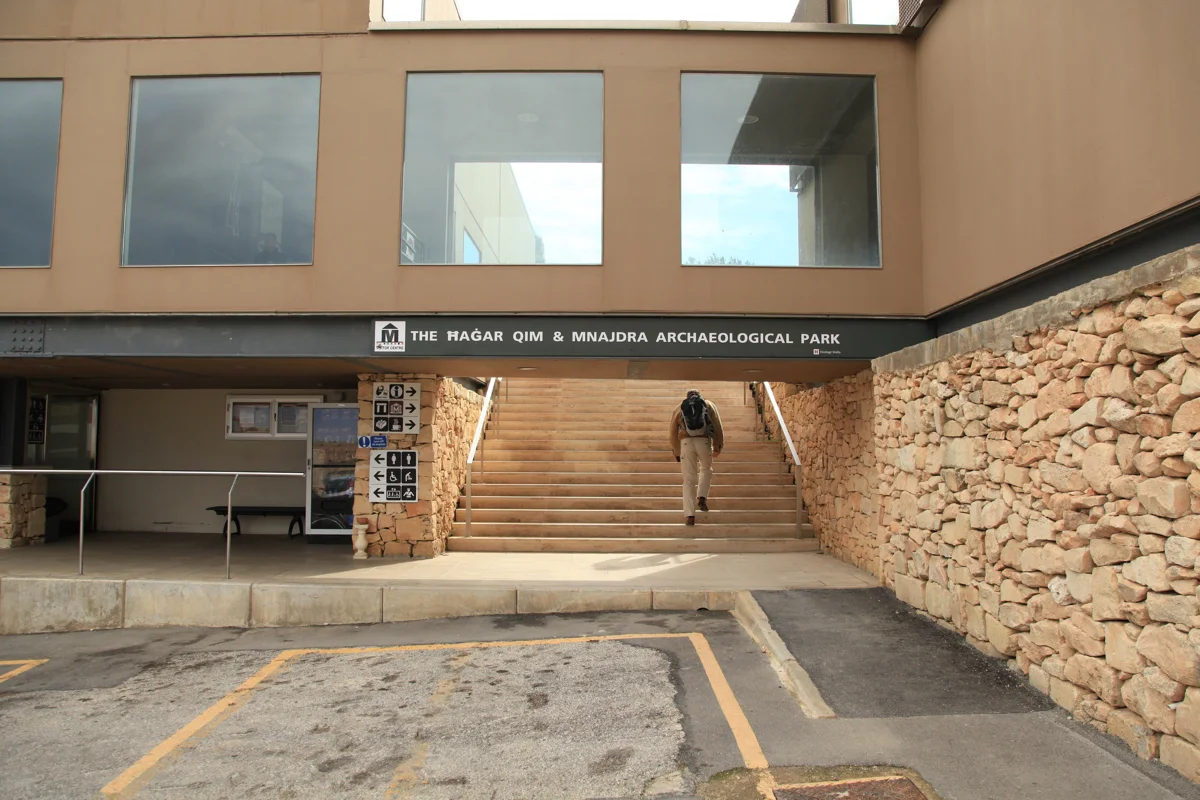
Use the official Heritage Malta park listing to identify the destination: Triq Hagar Qim, Qrendi. Save the visitor-centre location before leaving your accommodation. The two names describe separate temple complexes within the same park; putting only Mnajdra into a navigation search should not be taken as an instruction to look for a vehicle approach to the lower monument.
Check the complete route from your actual starting point. A departure from a northern resort, a central hotel or Malta International Airport is a different journey even when the final destination is identical. Do not use a generic island-wide driving estimate to decide whether you can arrive before admission closes. Road conditions on the day, your confidence with the hired vehicle and the time needed to find parking all belong in that calculation.
Save a second pin for your accommodation or next confirmed stop rather than improvising the return while standing beside the car. A passenger can handle directions; if you are travelling alone, set navigation while safely parked. Keep the final approach on signed public roads and follow local restrictions instead of accepting an apparent shortcut simply because it reduces the distance on the screen.
For a newly collected vehicle, first establish where the lights, demister, parking brake and fuel information are. There is no advantage in discovering unfamiliar controls during the final approach. Our Malta driving and parking guide covers the wider island context; this outing still needs its own arrival point and a sensible amount of time outside the car.
Separate parking availability from an admission ticket
Heritage Malta's access statement describes public parking immediately outside the visitor centre, including designated disability spaces. It says spaces cannot be reserved. This is useful arrival information, not a promise that a bay will be vacant when you reach the park. Follow current signs and staff directions, and check any displayed parking conditions rather than assuming an admission payment settles every part of the visit.
When choosing a space, consider how your passengers will get out. A family unloading a pushchair and a traveller transferring to a mobility aid may need different clearance. Do not occupy a restricted bay without the required entitlement or stop across an entrance while the group organises bags. If the available arrangement does not work, ask staff about a permitted drop-off and parking sequence before leaving the vehicle.
Bring only what you intend to carry around the site. Pack water, suitable shoes, sun protection when needed and a charged phone before locking the car, rather than repeatedly returning for forgotten items. Keep travel documents and valuables with you or in appropriate secure storage. The presence of a public car park does not make belongings left inside a rental vehicle insured or supervised.
A useful check before walking away is simple: note the parking location, lock the vehicle, retain the key securely and confirm that everyone has what they need. If you must move luggage, do it at a suitable private or secure location beforehand when possible. The aim is to begin the visit with the car settled, not to use the first part of the archaeological visit to manage an unfinished airport transfer.
Decide whether the Mnajdra walk suits your group
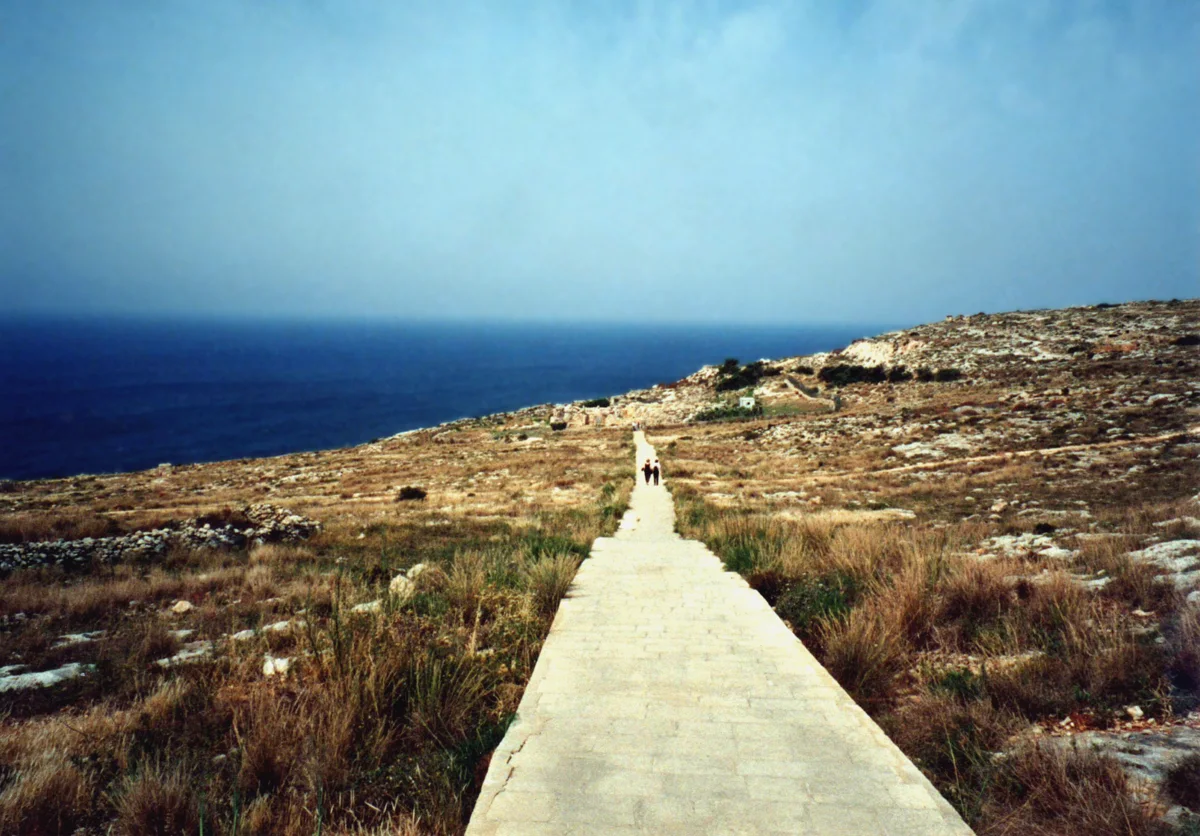
The operator places Mnajdra about 500 metres downhill from Hagar Qim. Heritage Malta lists the visitor centre and Hagar Qim as accessible, with assistance still needed at Hagar Qim, but does not classify Mnajdra as accessible. Those distinctions matter more than an overall description of the attraction as suitable for visitors with reduced mobility. A parking space near the entrance does not remove the terrain inside the park.
The access statement describes an inclined paved connecting path and uneven steps within Mnajdra. Read it alongside current advice from the park if anyone in your group needs a step-free route, assistance or a particular type of walking surface. Ask about the exact route you hope to follow, rather than asking only whether the attraction is accessible. Describe your practical needs without assuming that a general facility symbol answers them.
Make the decision about the lower complex before starting downhill. Agree whether everyone will continue, whether part of the group will remain near the upper visitor facilities, and where you will reunite. Keep any split-group plan workable without depending on a phone call being answered immediately. Children should stay with their accompanying adult, and nobody should feel obliged to complete the walk merely because the ticket covers more than one area.
Allow for the way back as a separate effort. The car remains at the arrival area; reaching Mnajdra is not the end of the outing. If conditions or fatigue make the return unattractive, choose a shorter visit before committing to the descent. Do not build the plan around a transport service mentioned in an older document unless the park confirms that it operates for your visit and meets your needs.
Check the calendar before choosing a departure time
Use Heritage Malta's current opening-hours and special-notices page for the date you intend to visit. The published general rules include closure on 1 January, Good Friday and 24, 25 and 31 December, with last admission thirty minutes before closing. Check the park's seasonal timetable as well. A holiday itinerary should not rely on a search snippet or a photograph of a timetable saved during a different season.
Last admission is a ticketing cutoff, not a recommended arrival time for seeing both complexes. Heritage Malta gives a broad visit duration of ninety minutes to three hours. Treat that as an indication of how much the experience can vary, not as a stopwatch target. Reading displays, using an audio guide, accompanying children or taking a slower walking pace can change the shape of your visit.
Work backwards from the time you must leave the park. Reserve enough room for the walk back, collecting belongings and getting everyone into the car. Then place the actual time inside the attraction before that departure, and the road journey before admission. If the available window becomes too short, move the visit to another day or choose a smaller programme instead of treating closing time as negotiable.
Before paying, check the current ticket categories and any eligibility evidence required for concessions. A ticket for an archaeological attraction is separate from your car reservation, and neither should be assumed to include the other. Read the terms of the ticket product you select, especially if choosing a package or special event. Save the confirmation in a form you can retrieve easily at reception.
Use the visitor centre to make sense of two different sites
The UNESCO listing for Malta's megalithic temples describes a serial heritage property whose individual complexes differ in design and construction. Hagar Qim and Mnajdra are not simply two names for interchangeable ruins. Their surviving entrances, chambers and masonry reward a visit that leaves time to understand what you are looking at rather than rushing between photo locations.
UNESCO also explains the conservation role of the protective covers. The shelters are part of preserving vulnerable remains, not evidence that the monuments have become indoor museums. Expect the photographs in older guides to differ from your own view. Use archival pictures to recognise the landscape and structures, not to infer today's access arrangements, barriers, facilities or weather.
A practical order is to orient yourself at the visitor centre, ask any access questions, then choose how to divide the time between the complexes. This is a suggested planning sequence, not a compulsory tour route. Follow the current visitor instructions when you arrive. A person especially interested in the buildings may want a different pace from someone accompanying young children or making a shorter visit.
Give each person a clear way to enjoy the stop. For an interested adult, that might mean time with the interpretation rather than an extra drive afterwards. For a child, choose a few observable details to look for instead of expecting sustained attention through every display. Keep to the permitted visitor route and respect barriers; an appealing photograph is not a reason to enter a protected area.
Keep Blue Grotto and lunch as choices, not obligations
If the temples are the reason for the journey, give them priority in the schedule. Our Blue Grotto and Marsaxlokk driving guide covers a different coastal outing. It can help you decide whether another stop fits, but the existence of several nearby names on a map is not proof that all of them belong in the same day.
Use a decision point after the archaeological visit: how much time remains, how does the driver feel, and does everyone actually want another stop? Continuing only when those answers are favourable gives you a more realistic plan than promising a temple visit, a boat activity and a long lunch before checking their individual arrangements. Any boat excursion needs its own operator and conditions check.
Choose a meal stop based on the route you will really take. Confirm opening and parking independently if a particular restaurant matters to your group. Do not let an unconfirmed reservation dictate a rushed walk back from Mnajdra. Carrying a modest snack can provide flexibility, subject to the park's rules about where food may be consumed, without turning the vehicle into your only backup for the day.
For a quieter itinerary, return to your accommodation after the temples and leave the coast for another outing. That is not a failed sightseeing day. It preserves time for the parts of the park you came to see and avoids converting a useful rental car into pressure to keep adding destinations. The return journey deserves the same attention as the outward drive.
Build a budget without confusing separate payments
Write the outing budget as separate lines: the car cost attributable to your rental period, fuel for the planned route, attraction tickets for the actual party, any parking payment and food. If the vehicle is already booked for a week, distinguish the extra cost of this day from the cost of renting solely to make the visit. That distinction makes a car-versus-transfer comparison much more useful than dividing every expense by an assumed daily rate.
Use amounts from your own booking and the current admission checkout rather than a sample package advertised for a different group. For fuel, an estimate can be calculated from planned kilometres multiplied by the car's expected litres per hundred kilometres, divided by one hundred, then multiplied by the current price per litre. Treat the result as an allowance, not an exact bill: detours and actual consumption can change it. Keep a separate reserve for changes to the itinerary instead of reducing the time allowed for the visit to protect a tightly drawn budget.
Choose the rental arrangement for the whole holiday
Compare the Malta rental-car catalogue using your actual dates and collection arrangements. A temple visit alone does not establish which vehicle or payment product is best. Consider the passengers, luggage, transmission you are comfortable driving and the other journeys in your holiday. A larger model is not automatically more convenient for a day whose most important movement happens on foot.
Read the selected offer's fuel policy, mileage allowance, deposit and payment requirements. Ask the supplier about unclear terms before booking; do not infer no-deposit availability or card acceptance from a general travel article. Attraction admission and parking expenses are separate budget items. Leaving room for them gives a clearer comparison than looking only at a daily headline rental price.
On a departure day, start with the agreed vehicle-return location and time, then account for refuelling if required, inspection and the airport process. Use the Malta transport comparison when deciding whether a hired car is useful for your wider stay. If the archaeological visit makes the final day too tight, visit earlier rather than relying on a short road distance to protect a flight deadline.
Questions & answers
Can I drive from Hagar Qim down to Mnajdra?
Plan to leave the car at the visitor-centre arrival area and use the designated visitor route. Do not interpret a navigation pin at Mnajdra as permission to drive through the archaeological park.
Does parking mean both temples are accessible?
No. Check the park's separate advice for the visitor centre, Hagar Qim and Mnajdra. Discuss any assistance or step-free requirements with staff before deciding how much of the visit to undertake.
Should I include the temples on an airport-return day?
Only if the visit, walking return, driving, any required fuel stop and vehicle handover all fit comfortably before your airport deadline. An earlier holiday day gives you more flexibility.
Do I need a car just for this attraction?
Not necessarily. Compare the complete journey from your accommodation and the rest of your itinerary. A rental car is one transport choice, not a condition of admission to the archaeological park.